 I haven't used this blog in a while. A long time, really. But trying to cope with losing one of my closest friends at the start of this year made me wonder if recording my thoughts would be beneficial. John Slavin first came to my attention early in 2010 as a car enthusiast who appeared in my Twitter timeline. His tweets showed he was intelligent, funny, compassionate and interested in what we automotive writers were saying. It was obvious from his blog that he had a talent for being expressive and thoughtful. His attitude to work, his appetite for learning and his boldness in trying his luck in contacting the right people to get his work published in those early days marked him out as someone who deserved the right break. I remember seeing one of his first pieces in Car Dealer magazine, as James Baggott had clearly also spotted John's potential. John also had an outlet for some car reviews in a magazine put together by Tim Hutton. I secured John an invitation to the SMMT Test Day at Millbrook that May – a big day for automotive writers to get access to as many test vehicles as possible in one day, in the same location, with the chance to drive them on varied test routes – which was the first time we met in person. In August 2010, I offered John four days’ paid work at Fleet News. I was deputy editor there, and it was useful to have someone as keen and capable as him to help keep the website ticking over with news stories during staff holidays and I gave him a feature on fuel that would fill a few pages in the next issue. 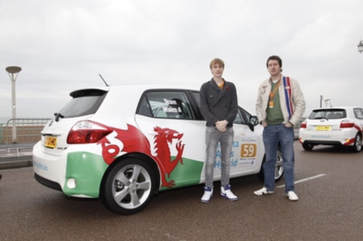 During this time I was able to introduce him to the editorial team managing HonestJohn.co.uk – just Dan H and David in those days. A few months later he would apply for a job there and make a success of it. Later that year, I was invited by Toyota to take part in the RAC Future Car Challenge, and had a seat for a passenger. I thought it might be useful for John to blog about and invited him along. It was a great networking opportunity. John was always appreciative of any help anyone gave him as he made his way up the ladder in our industry. But it was his own drive to succeed that made the difference.  John and I had a few road trips together. We went to Goodwood Festival of Speed in June 2012, and to the National Motor Museum in Beaulieu in January 2013, when the mild weather encouraged me to drag the Bentley out of winter storage. Another time we spent a morning off-road driving at Mercedes-Benz World, followed by a visit to Brooklands Museum. There was a good day out at the Classic and Restoration Show at Birmingham NEC in 2015. I also had a couple of long trips to Geneva with John – one in 2012, and another in 2016. Sometimes, if we knew we were on the same car launch, we'd drive to the airport in the same car, as well as share test cars on the event. John was always great company, and always in demand as the perfect co-driver. He'd always make the day pass more quickly, and, when it was his turn behind the wheel, always drive safely. When news spread of his death, I had never seen anything like the outpouring of sorrow and condolences on Twitter before, among our close-knit community of automotive writers and PR people. 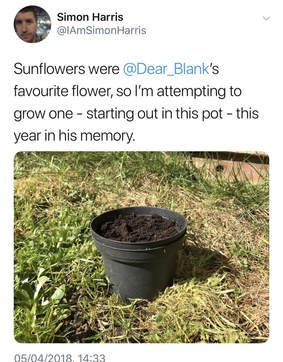 But no one should have been surprised, because I can honestly say I have never known anyone in my 20 years of mixing with others in this community who was as universally liked. No one ever had a bad word to say about John. A well as his office colleagues, many journalists and editors from other publications attended his funeral. The scale of the sunflower growing this year is a testament to how well liked and respected John was. I posted online in April that I was going to grow sunflowers in memory of John, and Adam Binnie, of Parkers, saw an opportunity to turn it into something more significant, where we could all so something every year to remember him and donate to a good cause. I had been aware of his illness, and I realised how serious it was through his time off work last year. I used to send him a message on WhatsApp sometimes while he was off work to ask how things were. He would always make it seem that things were better than they must have been. 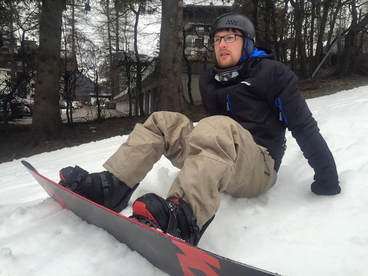 When I found out he was off work in December, we chatted briefly a few times. He told me he didn’t feel as bad as when he was off work in the spring, so I expected to see him in the new year when he had begun to feel better.
I sent John a message on Boxing Day after I’d been to the cinema to see the new Star Wars film because there had been a trailer for Avengers: Infinity War, and I knew he’d have been looking forward to seeing that, and we talked about how great it looked. I also sent him a message on New Year’s Day because he’d been in my dream the night before. In it, we were snowboarding, or at least attempting to, but were frustrated by rapidly melting snow. I told him about my dream, and saw that he’d read the message but didn’t think anything of him not replying. Maybe he was busy or not up to talking that day. Just 24 hours later, we received the worst possible news. We all miss John terribly, and he is in my thoughts every day.
0 Comments
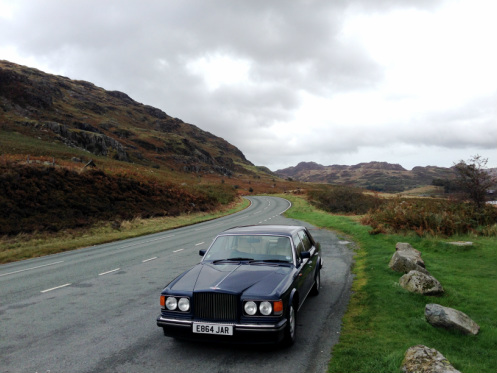 Annual mileage in the Turbo R demonstrates what a practical everyday car this is for a classic. If I didn’t store it during the winter, it’s possible that it could be covering 8,000 or more miles a year.
That’s if I could afford the fuel and more than one annual service. Costs have mounted up this year and although the Bentley has never broken down, a few jobs have been required (gas spheres, drive shaft boots, air-con re-gas, noisy fuel pump). But maintaining the car at this level allows me to decide on a whim that perhaps today I’ll drive to a far-flung part of the country, and a few hours later I’m there.  Volvo has announced the new Concept Coupé to be unveiled at the 2013 Frankfurt Motor Show.
It might seem unusual for a company still strongly associated with practical and safe estate cars, the company actually has a rich coupé heritage. 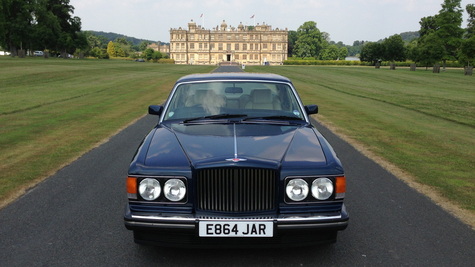 A call out of the blue an hour before a planned drive from the office to Wiltshire for an overnight stay gave me a dilemma.
"Your car is ready for collection. Would you like to pick it up?" The Bentley had been in the workshop to get to the bottom of the grumbling fuel pump, while the drive shaft boots were also replaced, air conditioning re-gassed and the car was given a fresh MOT. Yes, I've owned it for a year. Would I pick it up and leave it unattended at the office for up to two days or would I take it on a near 400-mile round trip to Warminster? The question was, of course, redundant as I pulled in to refuel. 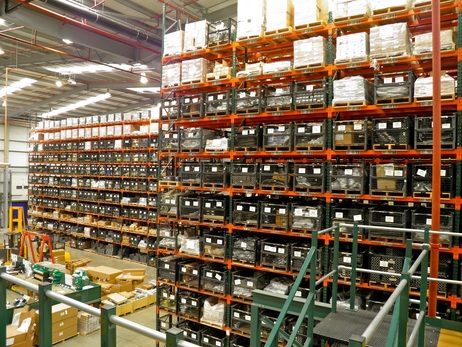 Bentley Sydney, New South Wales, Australia. A customer in reception with a 1965 S3 has a smashed rear window.
A cyclist wasn't paying attention and didn't see the car brake suddenly when a pedestrian appeared to step into the road without warning. No lasting harm done to the cyclist, who was wearing a helmet, and evidence of the incident on the Bentley's bodywork is minimal: minor scratches on the boot lid with no metal damage, but that smashed rear window. Just 72 hours later the Bentley driver is contacted with news that the car is ready to collect after a genuine rear screen was fitted. How? A state-of-the-art parts warehouse and dispatch process in Crewe exists purely to solve such problems. 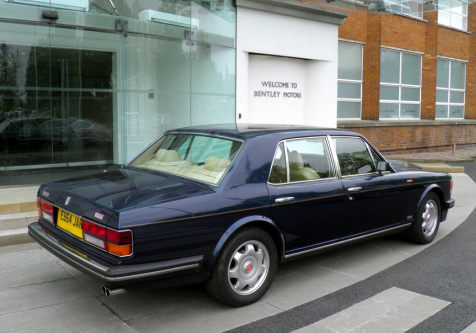 Bentley Motors. The name has hung on the front of the headquarters at Crewe since BMW's ownership of Rolls-Royce Motor Cars left the Volkswagen-owned brand with the resources and facilities in the North West.
Now, 25 years after my car was hand-built there I decided it was time to take the long journey back to see how things have changed since the German owners separated the top luxury brands in automotive.  Confusion exists over which 2.2-litre diesel engine are shared between different vehicles.
Allow me to explain. Land Rover Defender 2.2 TDCi - engine shared with Ford Transit, Ford Ranger and derived from four-cylinder used in previous Ford Mondeo ST TDCi and Jaguar X-Type 2.2D. Engine is NOT shared with Land Rover Freelander and Range Rover Evoque. 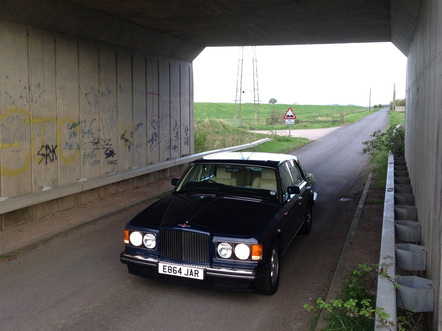 When I was warned that the gas spheres needed replacing, I just assumed it was something that was easy money for my local Bentley specialist.
Some mysterious yet crucial sounding component hidden from view would be enough to make a non-techie like me rather jittery. And sure enough, with a long drive around the corner I persuaded the garage to find a slot for the Turbo R to get its annual service, the gas spheres done and replace a noisy fuel pump. 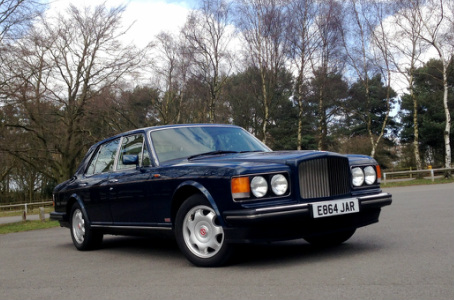 Waking up the car at the end of its hibernation always comes with a certain level of trepidation. It’s a tense game of chance that can sometimes result in relief or lead to a money being spent.
Rousing the Turbo R after its winter sleep –interrupted only for a weekend blast in early-January – was the same, but so far the results are mixed. The warning light sequence seems more prolonged than usual, but only when starting from cold. It could be time for work on the gas spheres for the suspension, according to the experts who look after my car during the winter (who incidentally would also stand to profit from the work carried out). 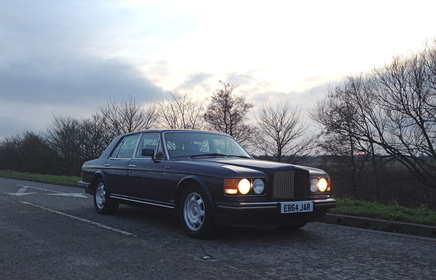 With another car to rely on for the day-to-day grind, my classic goes into hibernation each winter.
The ritual has become as familiar as the childood Blue Peter episodes every autumn when the tortoises were put away in a cardboard box for a few months. So in the last week of October I reluctantly put the Turbo R into storage expecting to live without it for the next five months, but knowing it was a better idea than being tempted to drive it on salted roads. |
Archives
August 2018
Categories
All
|
 RSS Feed